Dental Decay Treatment in Coolum Beach

Tooth decay can start with mild sensitivity, a small dark mark, or pain when you bite. If decay spreads deeper, it can damage the tooth, reach the nerve, or lead to infection.
Dentistry on Coolum provides dental decay treatment for children, adults, and families in Coolum Beach and nearby Sunshine Coast areas. Our dentists can check the tooth, explain what stage the decay has reached, and recommend a suitable treatment option.
Treatment may include fluoride support, a tooth-coloured filling, a dental crown, root canal treatment, or tooth removal if the tooth cannot be saved. We will explain your options clearly before treatment begins.
Need help with tooth decay? Book an appointment with Dentistry on Coolum and choose the next step with confidence.
Gentle Tooth Decay Treatment for Sunshine Coast Families
Dentistry on Coolum provides tooth decay treatment for children, adults, and families in Coolum Beach. We help patients manage tooth pain, sensitivity, visible cavities, and damaged teeth with clear advice and gentle care.
Locals from across the Sunshine Coast make the trip to our Coolum location for our experienced team, including Yaroomba, Point Arkwright, Peregian Springs and Marcoola.
If you think you may have tooth decay, our dentists can check the tooth, explain what is happening, and talk you through your treatment options. We focus on saving the natural tooth where possible and helping you feel informed before treatment begins.
What Is Tooth Decay?
Tooth decay happens when bacteria in the mouth produce acid that damages the tooth surface. This acid can weaken the enamel, which is the hard outer layer of the tooth.
Early tooth decay may not cause pain. Some people only notice sensitivity, a small mark, or food catching in the tooth. As decay spreads, it can create a cavity and move deeper into the tooth.
If decay reaches the inner part of the tooth, it can cause stronger pain, infection, or swelling. Early dental decay treatment can help stop the damage from getting worse and may give your dentist more options to restore the tooth.
Signs You May Need Tooth Decay Treatment
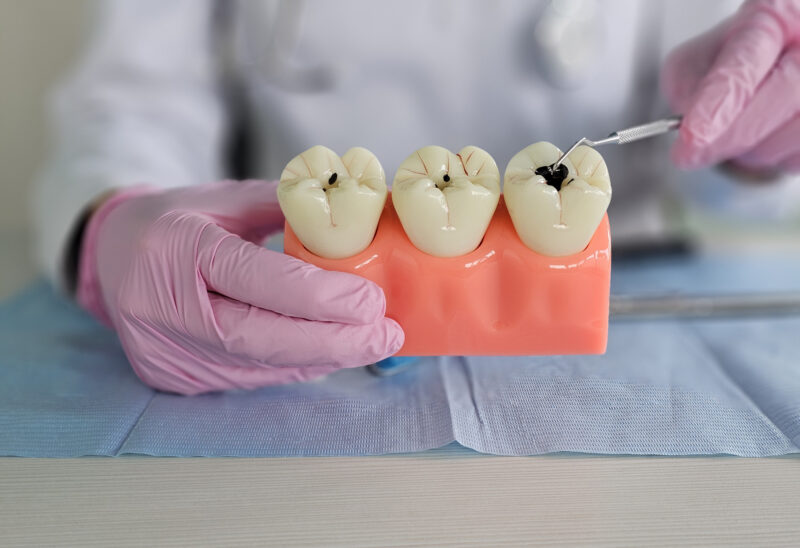
Tooth decay does not always cause pain straight away. Some people only notice a small change in the tooth before the decay spreads.
Common signs of tooth decay include:
- tooth sensitivity
- toothache
- pain when biting or chewing
- pain after eating sweet foods
- a visible hole or pit in the tooth
- brown, black, or white marks on the tooth
- food getting caught in one area
- bad breath or a bad taste in the mouth
- swelling near the gum
- a broken tooth
- a loose, leaking, or lost filling
If you have tooth pain, sensitivity, or a visible cavity, book a dental appointment. Our dentists can check the tooth and explain whether you need monitoring, a filling, or another form of tooth decay treatment.
How Our Team Treats Different Stages of Tooth Decay
The right dental decay treatment depends on how far the decay has spread. A small area of early decay may only need monitoring and support. A deeper cavity may need a filling, crown, root canal treatment, or tooth removal.
| Stage of Decay | What May Be Happening | Possible Treatment |
| Early enamel decay | The tooth surface has started to weaken, but there may not be a hole yet. | Fluoride support, oral hygiene advice, diet guidance, and monitoring. |
| Small cavity | Decay has created a small hole in the tooth. | A tooth-coloured filling may restore the tooth and stop the cavity from spreading. |
| Larger cavity | Decay has damaged more of the tooth structure. | A larger filling, onlay, or dental crown may be needed to rebuild and protect the tooth. |
| Deep decay | Decay has moved close to, or into, the nerve inside the tooth. | Root canal treatment may help save the natural tooth where possible. |
| Severe decay or infection | The tooth may be too damaged to repair safely. | Tooth extraction may be needed. Replacement options can be discussed if the tooth is removed. |
You do not need to know which stage you are at before booking. Our dentists can assess the tooth, take X-rays if needed, and explain the most suitable treatment options for your situation.
Book an appointment with our experienced team, and we can check the tooth to talk you through your options clearly.
Common Dental Decay Treatments
Dental decay treatment depends on the amount of damage in the tooth. Our dentists will check the area first, then explain which option is most suitable.
Fluoride support and monitoring
Early decay may not need a filling if the enamel has weakened but a cavity has not formed. In this case, your dentist may recommend fluoride, better cleaning around the area, diet changes, and regular reviews.
Tooth-coloured fillings
A dental filling is often used when decay has created a small to medium cavity. The dentist removes the decayed part of the tooth, then restores the area with a tooth-coloured material that blends with your smile.
Dental crowns
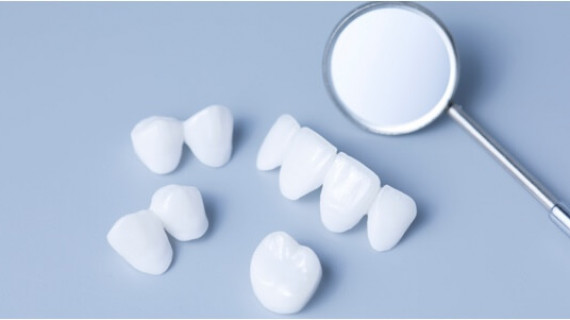
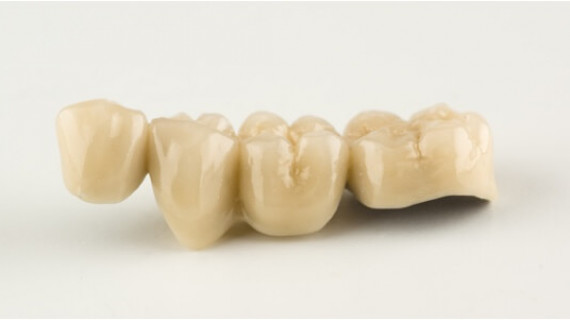
A dental crown may be needed when decay has weakened a large part of the tooth. The crown covers the remaining tooth structure and helps protect it during chewing. This may be recommended after a large filling or root canal treatment.
Root canal treatment
Root canal treatment may be needed if decay reaches the nerve inside the tooth. This treatment removes infected or inflamed tissue from inside the tooth. It can help save the natural tooth where possible.
Tooth extraction
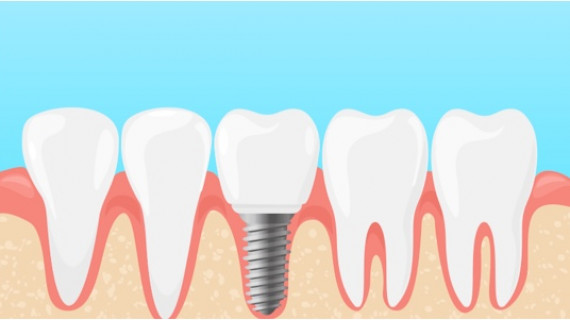
Some teeth cannot be restored safely. If decay has caused severe damage or infection, tooth extraction may be the best option. If this happens, we can discuss replacement options such as a denture, bridge, or dental implant.
What To Expect at Your Tooth Decay Appointment
If you feel nervous or worried that you have left the tooth too long, our aim is not to make you feel bad about it. Our job is to help you understand what is happening and what can be done next.
Your dentist will ask about your symptoms, check the tooth and assess the surrounding gums. If the decay is hidden between teeth or under an old filling, we may take an X-ray to see the full picture.
Once we know what is going on, we will explain how far the decay has spread, whether the tooth can be repaired, and what may happen if treatment is delayed.
Before treatment begins, we will explain your options, the likely costs, and the next steps in plain language. You can ask questions, raise any concerns, and take the time you need to feel comfortable with the plan. Our goal is to help you make an informed decision without pressure.
Book Dental Decay Treatment in Coolum Beach

Tooth decay is easier to treat when we find it early. If you have sensitivity, tooth pain, a visible hole, or a broken tooth, it is worth having it checked before the problem becomes harder to manage.
At Dentistry on Coolum, we will assess the tooth, explain what is happening, and talk you through your treatment options clearly. Whether you need simple support or more involved dental treatment for tooth decay, our team will help you understand the next step.
Book an appointment online or call Dentistry on Coolum on 07 5446 1616 and let us support you the whole way.
FAQs
What is the best dental decay treatment?
The best dental decay treatment depends on how far the decay has spread. Early decay may only need fluoride support, hygiene advice, and monitoring. A small cavity may need a filling. Deeper decay may need a crown, root canal treatment, or tooth removal if the tooth cannot be saved.
Can tooth decay be treated without a filling?
Early tooth decay may sometimes be treated without a filling if the enamel has weakened but a cavity has not formed. Your dentist may recommend fluoride, better cleaning around the area, diet changes, and regular reviews. Once decay has created a hole in the tooth, a filling or another treatment is usually needed.
Can tooth decay go away on its own?
A formed cavity does not usually repair itself. Early enamel damage may improve with fluoride, saliva, and better oral hygiene, but a hole in the tooth needs dental care. A dentist can check whether the decay is early or whether the tooth needs treatment.
What happens if tooth decay reaches the nerve?
If tooth decay reaches the nerve, the tooth may become painful, sensitive, or infected. Root canal treatment may help save the tooth by removing the infected or inflamed tissue from inside the tooth. If the tooth is too damaged, removal may be needed.
Is tooth decay treatment painful?
Your dentist can numb the area before treatment, so you should not feel sharp pain during the procedure. You may feel pressure or movement, depending on the treatment. If you feel nervous, tell us before we begin so we can help you feel more comfortable.
How much does tooth decay treatment cost?
The cost depends on the treatment needed. A small filling will usually cost less than a crown, root canal treatment, or tooth extraction. At your appointment, we will explain the likely cost before treatment begins. You can also ask us about health fund rebates and payment options.
Do children need fillings for tooth decay?
Some children need fillings if tooth decay has created a cavity. Early decay may be managed with fluoride support, better brushing, diet advice, and monitoring. Your dentist will check the tooth and explain the most suitable option for your child.
Should I see a dentist if my tooth only hurts sometimes?
Yes. Tooth pain that comes and goes can still be a sign of decay, a crack, an old filling problem, or irritation near the nerve. A dental check can find the cause before the pain becomes stronger or more constant.
Can a badly decayed tooth be saved?
Some badly decayed teeth can be saved with a filling, crown, or root canal treatment. Other teeth may be too damaged to repair safely. Your dentist will assess the tooth and explain whether it can be restored or whether removal is the better option.